I would like this post to truly be: Canning for Beginners: Everything you need to know to start safely at home, but the truth is, I am also learning and sharing what I know right now. SO, consider this blog post a living post that will be updated from time to time to reflect new information I learn, because one thing I have learned with food preservation is that there are always new things to learn!
But for now, I hope that this will be a quick-start resource for your canning journey, because in my opinion, there are few things more satisfying than a pantry stocked with nutritious meals and a heart at peace knowing that in hard times, your family won’t go without.
If you’ve ever stood in your kitchen with a basket of fresh produce and wondered, “How do I preserve all of this before it goes bad?”, you’re not alone. Canning, like raising chickens, is one of those skills that feels intimidating at first. There are different methods, safety rules, processing times…and it can feel like one wrong move might ruin everything. But here’s the truth: Canning doesn’t have to be complicated. With a simple understanding of the basics—and the right tools—you can begin preserving food confidently, even as a complete beginner.
Canning for Beginners at Home—Why?
For many women building a home-centered life, canning becomes more than just a skill—it becomes a rhythm. It allows you to:
- Preserve seasonal food at its peak of freshness
- Save money by buying in bulk or harvesting your own
- Reduce waste in your kitchen
- Build a pantry that supports your family
There’s something deeply satisfying about seeing jars lined up on your shelf, knowing you’ve created something both practical and nourishing. So far, with canning, I’ve been able to put up various jams and jellies, pie fillings, pickles, salsas, and tomato products for our pantry through the years. There is nothing like opening a jar of rhubarb jam to serve with biscuits on a cold February morning!
This past year, I started my pressure canning journey and have learned how to make shelf-stable beef stew, chili, chicken soup, and chicken broth. For years, I was nervous about pressure canning, but I think I have the hang of it now, and I’m looking forward to canning all sorts of vegetables this summer!
Peace of Mind
Having a well-stocked pantry for a large family like ours has brought me peace of mind. Through the years, we’ve had abundant times and lean times, but when our pantry is full, it greatly reduces the stress I would normally feel in the lean times. One thing that surprised me when I first began was how much money you can save when you preserve food strategically. I take advantage of our gardens, and seasonal sales, and it has reduced our overall grocery bill each year.
I also love that our pantry is stocked with minimally processed foods. Every mother wants to prepare nutritious food for her family. With canning, you can often make your family’s favorite convenience foods, but without all of the fillers and additives. My children know the difference, too! Once, the kids were sick, and I grabbed some store-bought soup to hold us over until I could make my chicken bone broth soup for them. They took one taste of that store-bought soup and said they much preferred my rich homemade version!
Whether you preserve food for peace of mind or nutrition, you really can’t go wrong when you gain this skill.
The Two Canning Methods You Need to Know
Before you begin, it’s important to understand that there are two primary canning methods, and each serves a different purpose.
1. Water Bath Canning
This method is used for high-acid foods, such as:
- Fruits
- Jams and jellies
- Pickles
- Tomatoes (with added acid)
Water bath canning is often where beginners start because it’s simple and accessible. My very first canning recipe was strawberry jam. It was the best jam I ever tasted, and I was surprised at how easy it was to make! I remember saying to my husband, “Why didn’t we grow up being taught how to do this?!”
Of course, not everyone has the time to can jars and jars of food, and growing up, both my parents worked, and we lived in a city. But I am happy that I’ve since learned this skill because it has served us well!
2. Pressure Canning
This method is required for low-acid foods, such as:
- Vegetables
- Meats
- Soups
- Broths
Pressure canning reaches higher temperatures, which are necessary to safely preserve these foods. This is why you will see many more warnings and safety precautions when it comes to pressure canning, but don’t let it scare you away from trying! Just take your time and follow each step according to the guidelines, and soon, your pantry will be a thing of beauty!
Why Canning Feels Overwhelming (and How to Fix It)
Here’s where most beginners get stuck: Not in the actual canning, but in trying to remember everything:
- All the measurements for the recipes, because many need to be precise for safety.
- What was the headspace again?
- How long do I process this?
- Which method do I use?
- Is this food safe for water bath or pressure canning?
When you’re in the middle of your first batch, flipping through notes or searching online can quickly turn confidence into stress. Just remember, the more prepared you are, the easier it will be.
A Simple Way to Make Canning Easier
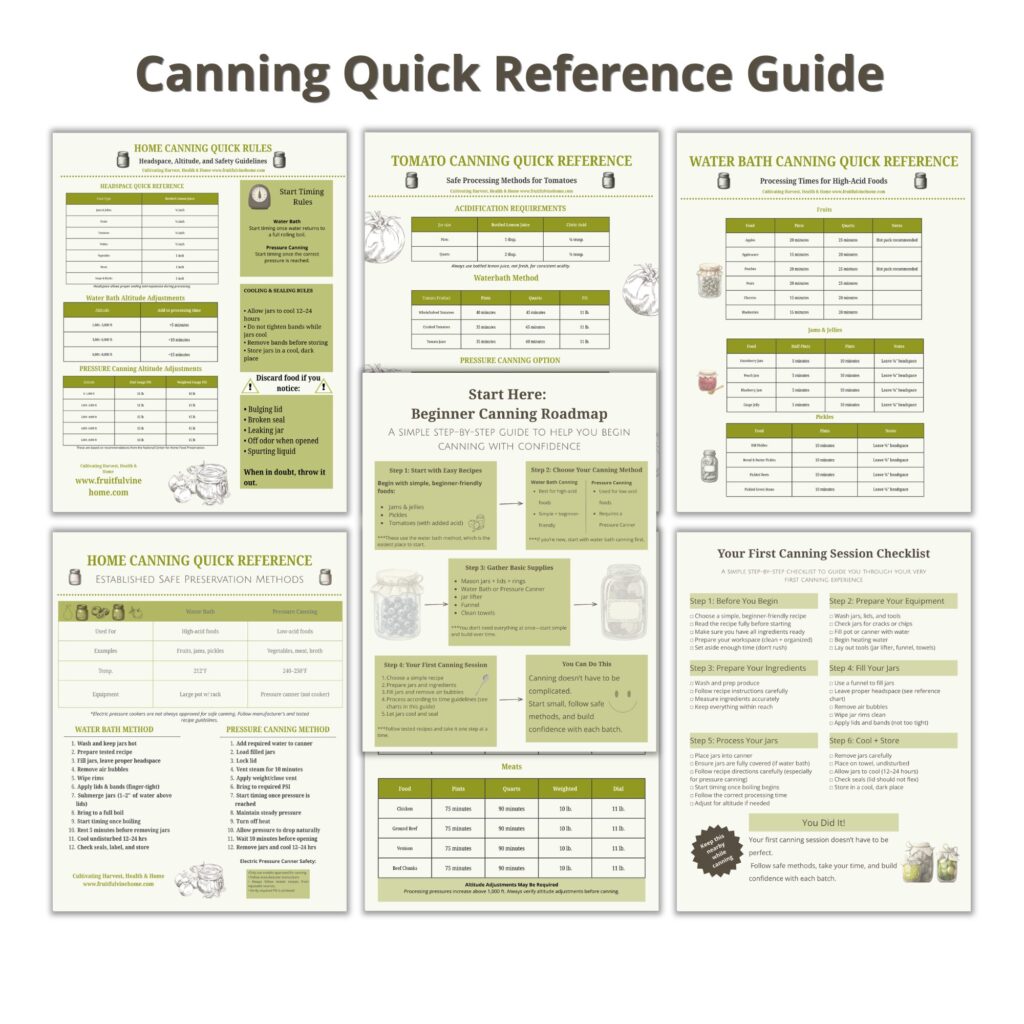
That’s exactly why I created a simple Canning for Beginners Quick Reference Guide—something you can keep right in your kitchen. Instead of second-guessing, you can:
- Quickly check processing times
- See which method to use
- Follow safe guidelines at a glance
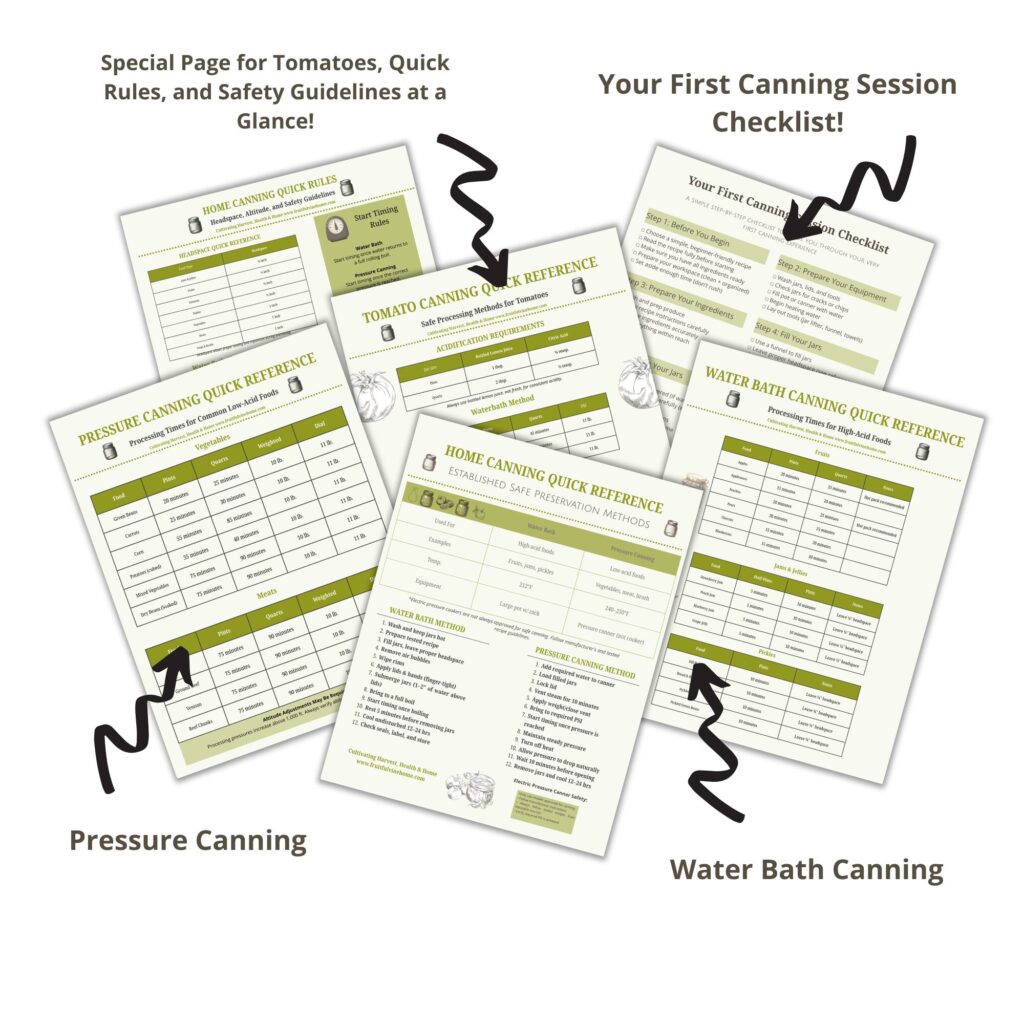
It’s designed to be practical—not overwhelming—so you can focus on actually learning the skill, not memorizing every detail. I laminated mine and keep it with all my canning equipment so I can just pull it out every time I need it. It’s an instant download where you will receive one 7-page printable PDF (8.5 x 11) that includes:
- Water Bath Canning Processing Times for High-Acid Foods
- Pressure Canning Guide for Low Acid Foods
- Quick Start Guide
- Fruit Canning Times
- Jam & Jelly Processing Times
- Pickle Processing Times
- Tomato Canning Methods (water bath and pressure options)
- Acidification Requirements for Tomatoes
- Headspace Quick Reference Chart
- Altitude Adjustment Charts for Water Bath and Pressure Canning
- Start Timing Rules
- Cooling & Sealing Guidelines
- Food Safety Warning Signs
- Your First Canning Session Checklist
This guide is designed to be printed and kept in your kitchen or food preservation area for quick reference while canning. It works well in a binder, on the wall, or on the fridge near your prep areas. All the information you need at a glance so you can proceed with confidence.
Canning For Beginners (Without Overwhelm)
If you’re just getting started, here’s the best approach:
- Start Simple: Choose one food—like jam or pickles—and learn that first.
- Have all your supplies ready ahead of time: From the canning equipment to the jars and lids, always get everything ready BEFORE you begin the recipe. It helped me a lot to create “zones” for each stage: Cleaning Zone, Supplies area, Prepping area, Cooking Area, Canning zone, Cooling zone.
- Use the Right Method: Don’t guess. Always match the food to the correct canning method.
- Follow Trusted Guidelines: Stick to reliable sources, recipes, and tested processing times.
- Keep a Reference Nearby: Having a quick guide in your kitchen removes stress and builds confidence fast.
A Final Word of Encouragement
You don’t need to master everything overnight. Canning is a skill that grows with you. Each batch you complete builds confidence. Each jar you seal reinforces that you *can* do this.
Start small. Stay consistent. And give yourself tools that make the process easier—not harder. Because this isn’t just about preserving food. It’s about building a home that nourishes your family well.
If you want that simple, at-a-glance Canning for Beginners guide to keep in your kitchen, you can grab it here: