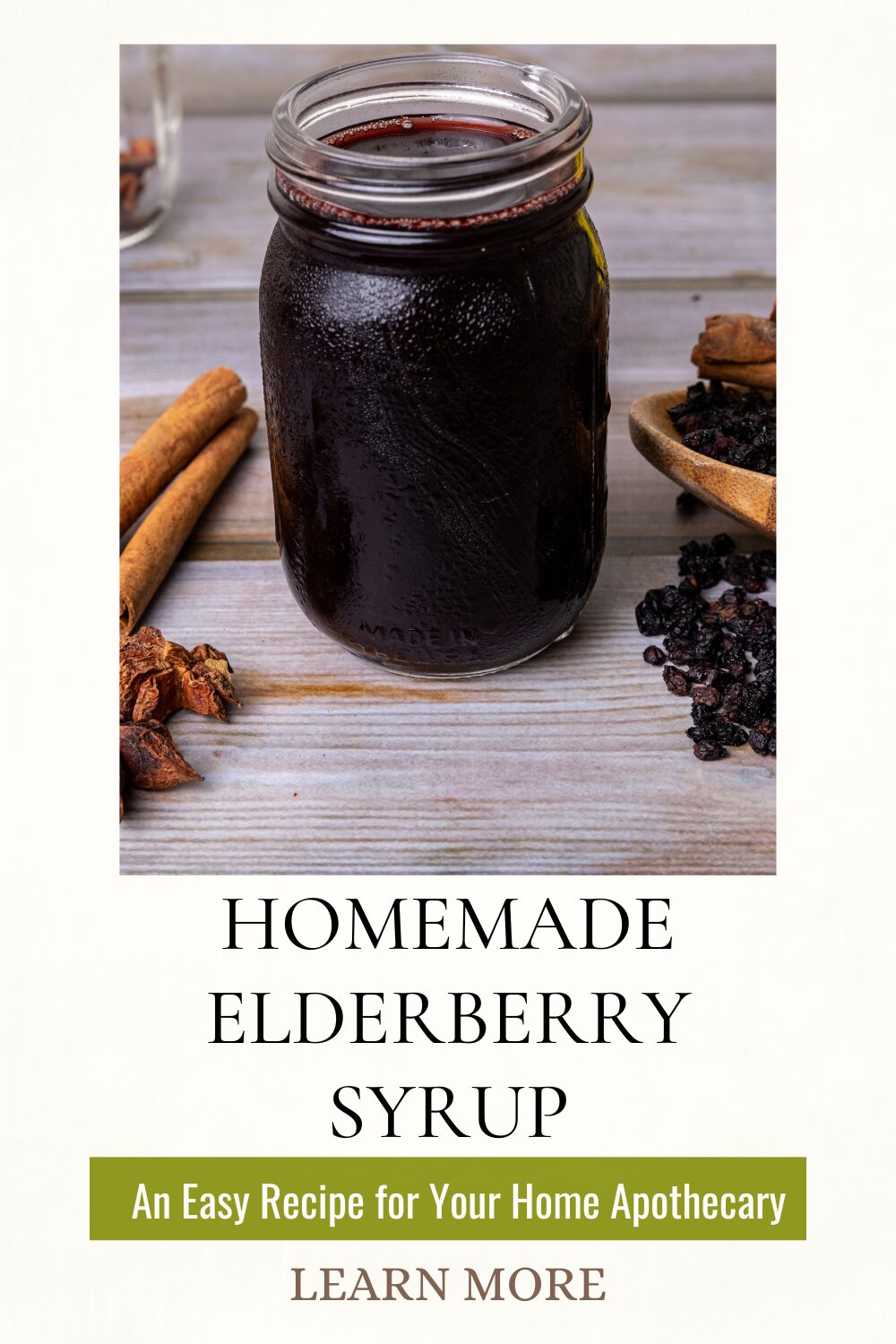
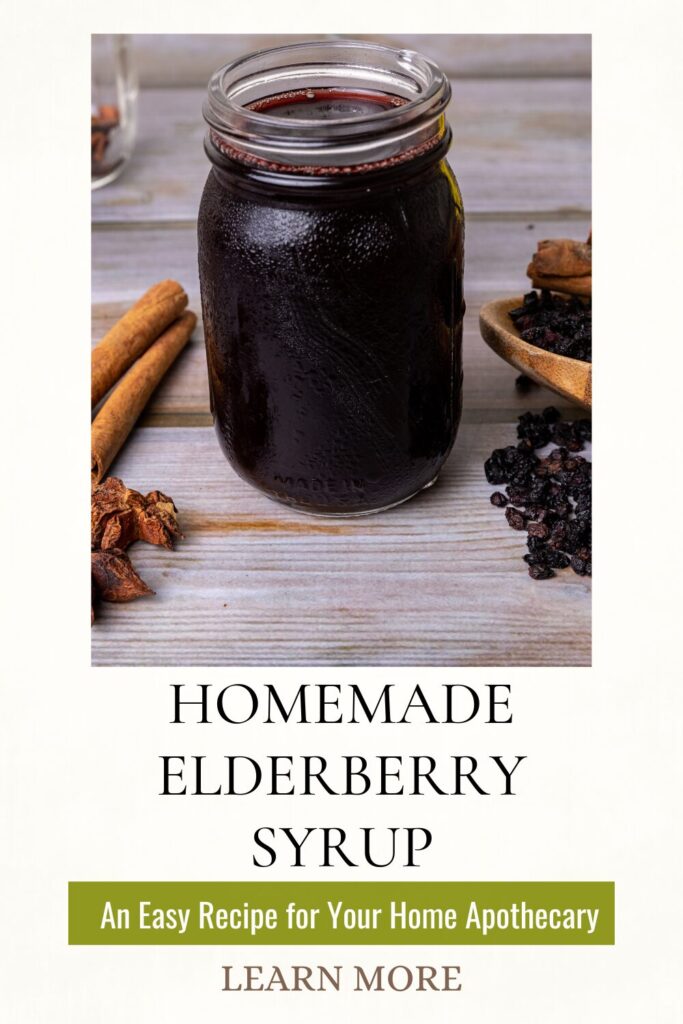
Learn how to make a simple homemade elderberry syrup using dried elderberries, rose hips, ginger, cinnamon, peppermint, and raw honey. This traditional herbal recipe has been a favorite in our home for years and is an easy addition to a well-stocked home apothecary.
Making homemade elderberry syrup has become one of my favorite late-summer traditions because I’ve learned it’s much easier to prepare our home apothecary before anyone in the family starts feeling under the weather. It’s one of the first remedies I tell moms to make because it gently supports the body and is safe for almost anyone to take.
This post contains affiliate links. As an Amazon Associate, I earn from qualifying purchases at no additional cost to you. Thank you for supporting Fruitful Vine Home.
By late summer, you’ll usually find me checking our pantry shelves, drying herbs from the garden, refilling jars, and making a fresh batch of elderberry syrup with last year’s harvest before anyone in the house starts reaching for tissues. (We now grow our own elderberries, but for years I bought them online) Now, I also add harvesting elderberries to my late-summer checklist and my dehydrator is often going around the clock to preserve them! What’s really cool is I have a good rotation going and it’s not often that my apothecary is without elderberry.
I’ve learned something about myself over the years—I don’t enjoy making herbal preparations when someone is already feeling miserable. And I certainly don’t want to gather ingredients while one of my children is curled up on the couch asking when it will be ready.
Instead, I like to prepare ahead. So, starting in July, I am usually preparing all kinds of herbal preparations: elderberry syrup and tea mixtures, at least 1 tincture for the adults in the house. I also begin prepping immune boosting capsules for everyone to begin taking in August to support the body and help prevent seasonal viruses that I know are about to make an appearance as Summer winds down.
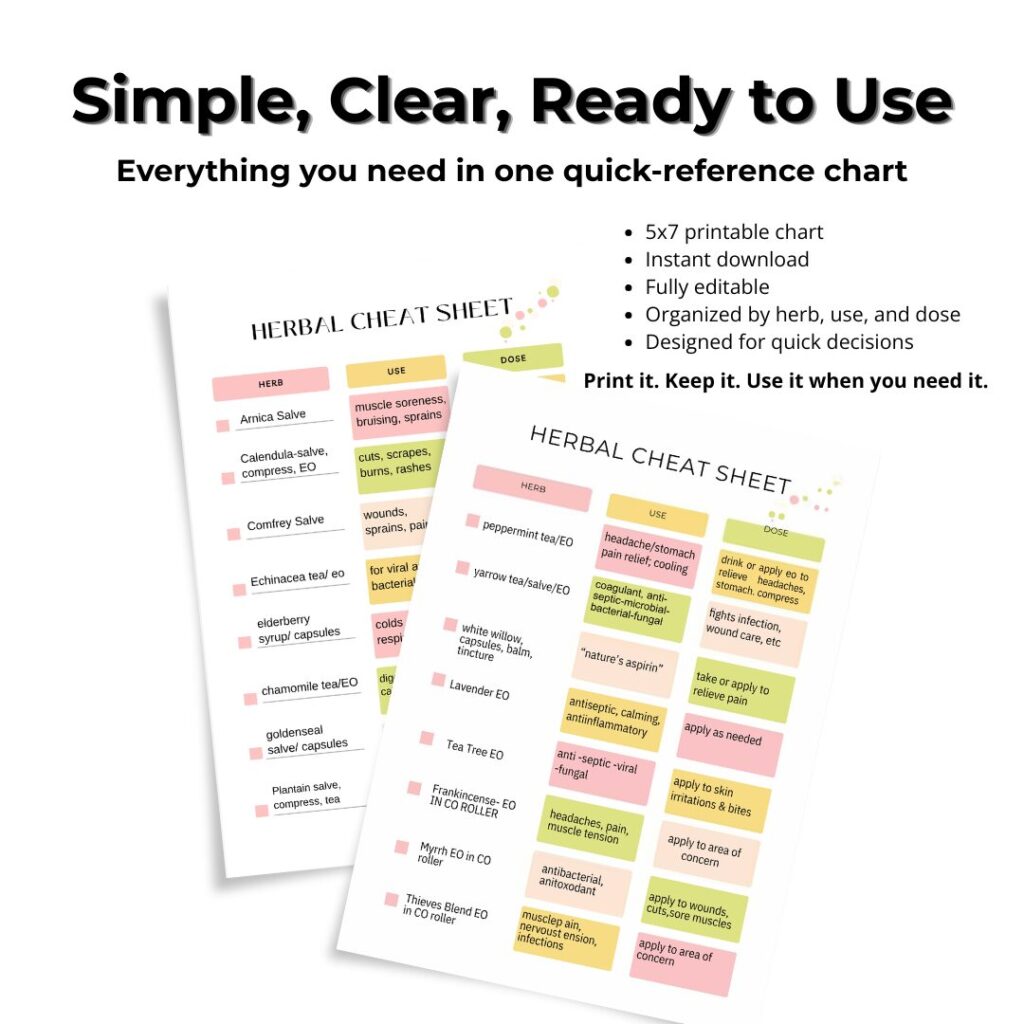
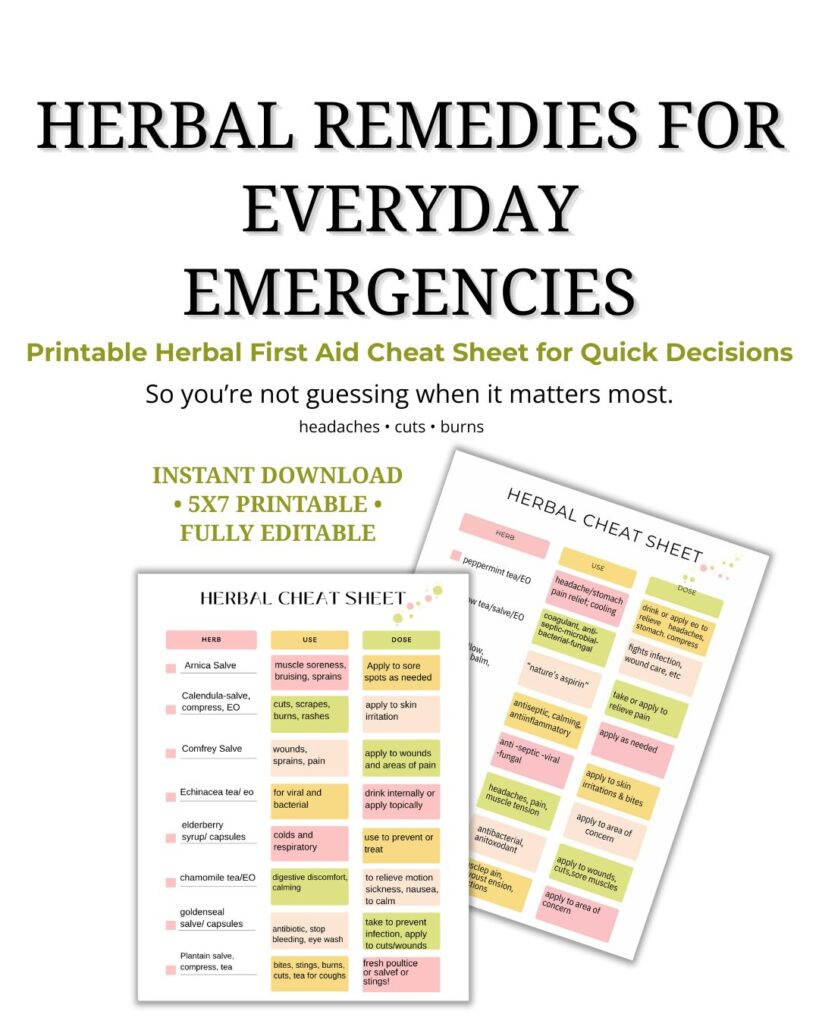
If you’re in the process of building your home apothecary, I’ve created an Herbal First Aid Cheat Sheet printable to keep on hand so you never have to guess which herb to use and when!
That simple habit has become one of the foundations of our home apothecary. Whether we end up using everything or not, there’s a certain peace that comes from knowing we’ve stocked our shelves before we need them. Plus, it’s fun! I love developing all natural formulas with God’s creation knowing that the medicinal properties help support overall wellness.
And today I’d love to show you how I make our homemade elderberry syrup, explain why each ingredient is included, and share a few safety considerations to keep in mind.
What You’ll Learn
In this post, you’ll discover:
- Why elderberry syrup has become a staple in many home apothecaries
- The traditional role of each herb in this recipe
- How to make homemade elderberry syrup step by step
- Storage tips
- Important safety considerations
- How to begin building your own herbal pantry with confidence
Why I Keep Homemade Elderberry Syrup on Hand
One of my goals in homemaking is reducing unnecessary stress. That means preparing when life is calm instead of scrambling when life feels chaotic. Homemade elderberry syrup fits beautifully into that philosophy. For generations, elderberries have been used in traditional herbal practices, especially during the colder months of the year. Today, many families continue making elderberry syrup because it’s simple to prepare, tastes pleasant, and stores well in the refrigerator for several weeks. (It even tastes great on pancakes!)
Rather than seeing it as a cure-all, I simply think of it as one of many traditional herbal preparations that belongs alongside nourishing meals, adequate rest, hydration, and good everyday health habits. Building a home apothecary isn’t about replacing medical care, it’s about supporting your body. I personally believe that plants hold medicinal properties, given to us by God to use for supporting healing in the body. Food, including plants, is medicinal. Our bodies have the potential to heal themselves when given the right building blocks to do so.
It’s about thoughtfully learning traditional skills, understanding the herbs you choose to keep, and preparing your home before the need arises.
What Are Elderberries?
Elderberries are the small, dark purple berries of the elder tree (Sambucus nigra and related species). For centuries, they have been used in traditional herbal preparations throughout Europe and North America.
The berries naturally contain:
- Vitamin C
- Anthocyanins (the compounds responsible for their deep purple color)
- Naturally occurring plant compounds called polyphenols
While elderberries have been studied for their nutritional composition and traditional uses, research on their full health effects is still evolving. Homemade elderberry syrup should be viewed as a traditional food-based herbal preparation rather than a substitute for medical treatment.
Important: Raw elderberries, leaves, stems, and seeds contain naturally occurring compounds that can be harmful if consumed in large quantities. Elderberries should always be properly identified and cooked before use.
For convenience and consistency, I almost always purchase dried elderberries from a reputable supplier.
Why These Herbs In My Homemade Elderbery Syrup?
One of the things I love about herbalism is that every ingredient has a purpose. Here’s why I include each one.
Dried Elderberries
These provide the rich berry flavor that makes this syrup so enjoyable. Traditionally, elderberries have been used in seasonal herbal preparations and are valued for their naturally occurring antioxidants.
Rose Hips
Rose hips are naturally high in vitamin C and add a pleasant fruity note to the finished syrup.
Ginger Root
Fresh or dried ginger gives the syrup warmth and depth of flavor. Traditionally, ginger has long been appreciated in kitchens and herbal traditions alike and it is favorved in herbalism for tummy troubles and digestive support.
Cinnamon Sticks
Cinnamon contributes warmth, aroma, and wonderful flavor while rounding out the syrup beautifully. In herbalism, it is used for its anti-inflammatory and antioxidant properties.
Peppermint
Peppermint adds freshness and creates a lighter finish to balance the sweetness of the honey. Herbalists prize peppermint many reasons, but the reason it is included in this recipe is to help soothe the tummy and throat, aid in reducing congestion and support the immune system.
Raw Honey
Raw honey transforms the herbal infusion into a syrup while contributing its own rich flavor.
NOTE OF CAUTION: Do not give honey to infants under one year of age. (Consider a glycerite preparation instead) If you are pregnant or nursing, this recipe is NOT recommended. Consider an elderberry syrup recipe that only contains elderberry and not other herbs.
Homemade Elderberry Syrup Recipe
Ingredients
- 1 cup dried elderberries
- ½ cup dried rose hips
- ½ cup dried peppermint leaf
- 5 whole cinnamon sticks
- ½ cup fresh or dried ginger root
- Distilled water (enough to cover the herbs by several inches)
- 2 cups raw honey (sugar or maple syrup if you plan to give to a child younger than 1)
How to Make Homemade Elderberry Syrup
Step 1
Place the elderberries, rose hips, peppermint, cinnamon sticks, and ginger into a medium saucepan. Cover with distilled water.
Step 2
Bring the mixture to a gentle simmer over medium-low heat. Avoid a rolling boil.
Step 3
Allow the herbs to simmer for about 20–30 minutes, or until the liquid has reduced and become fragrant.
Step 4
Remove from the heat and let the herbs steep for another 15–20 minutes.
Step 5
Strain through a fine mesh sieve or cheesecloth into a large glass bowl. Press the herbs gently to extract as much liquid as possible.
Step 6
Allow the herbal infusion to cool until it is warm—not hot.
Step 7
Stir in the raw honey until completely dissolved.
Step 8
Pour into clean glass bottles or mason jars. Store in the refrigerator.
How Long Does Homemade Elderberry Syrup Last?
Because this recipe contains fresh ingredients and honey, it should be stored in the refrigerator. I generally use ours within about three weeks.
If you make large batches, you can also freeze portions in small freezer-safe containers or silicone ice cube trays to thaw as needed.
Building a Home Apothecary One Recipe at a Time
If you’re just beginning your herbal journey, don’t feel like you need fifty jars of herbs before you can start. Begin with a handful of recipes your family will actually use. That’s exactly how our home apothecary grew.
One jar. One herb. One recipe. One season at a time.
Over the years, I’ve learned that consistency matters far more than having the largest collection.
Helpful Safety Notes
Whenever you’re working with herbs, it’s wise to do a little homework first. Keep these reminders in mind:
- Always purchase herbs from reputable suppliers.
- Properly identify fresh elderberries before harvesting.
- Never consume raw elderberries or other parts of the elder plant unless you are certain they have been prepared safely.
- Some herbs may not be appropriate during pregnancy, while breastfeeding, for young children, or for individuals with certain medical conditions or medications.
- If you have questions about whether an herb is appropriate for your situation, consult a qualified healthcare professional before using it.
Start Your Home Apothecary with Confidence
If you’re beginning to build your herbal pantry, my Herbal Cheat Sheet Printable is designed to help you quickly remember common herbs, their traditional uses, and basic preparation methods. It’s a simple reference to keep tucked inside a binder, cabinet, or recipe notebook so the information is easy to find whenever you need it.
You may also enjoy these related posts:
- 10 Herbal Remedies Every Home Should Have
- How to Start a Home Apothecary Without Feeling Overwhelmed
Together, they provide a practical starting place for creating a home apothecary that grows one thoughtful step at a time.
Frequently Asked Questions
Can I use fresh elderberries?
Yes, provided they are correctly identified and prepared safely. Many people prefer dried elderberries because they’re convenient to store and available year-round.
Can I freeze elderberry syrup?
Absolutely. Freezing smaller portions is a great way to extend its shelf life.
Can I substitute maple syrup for honey?
Yes. While the flavor will be different, maple syrup can be used if you prefer not to use honey.
Do I have to use every herb?
No. Recipes often evolve based on personal preference and what you have available. The finished flavor will simply change depending on the ingredients you include.
Is elderberry syrup a replacement for medical care?
No. Homemade elderberry syrup is a traditional herbal preparation and should not replace medical advice, diagnosis, or treatment. If you have concerns about your health or symptoms that are severe or persistent, seek guidance from your healthcare provider.
Final Thoughts
One of my favorite things about homemaking is learning skills that quietly serve our families long before they’re ever needed.
Making homemade elderberry syrup is one of those simple rhythms. It’s less about having the perfect recipe and more about cultivating a home that’s prepared, peaceful, and intentional.
Whether you’re just beginning your home apothecary or adding another trusted recipe to your collection, I hope this one encourages you to slow down, learn something new, and enjoy the process.
After all, homemaking isn’t about doing everything at once. It’s about faithfully tending what has been placed in your hands—one small, fruitful step at a time.