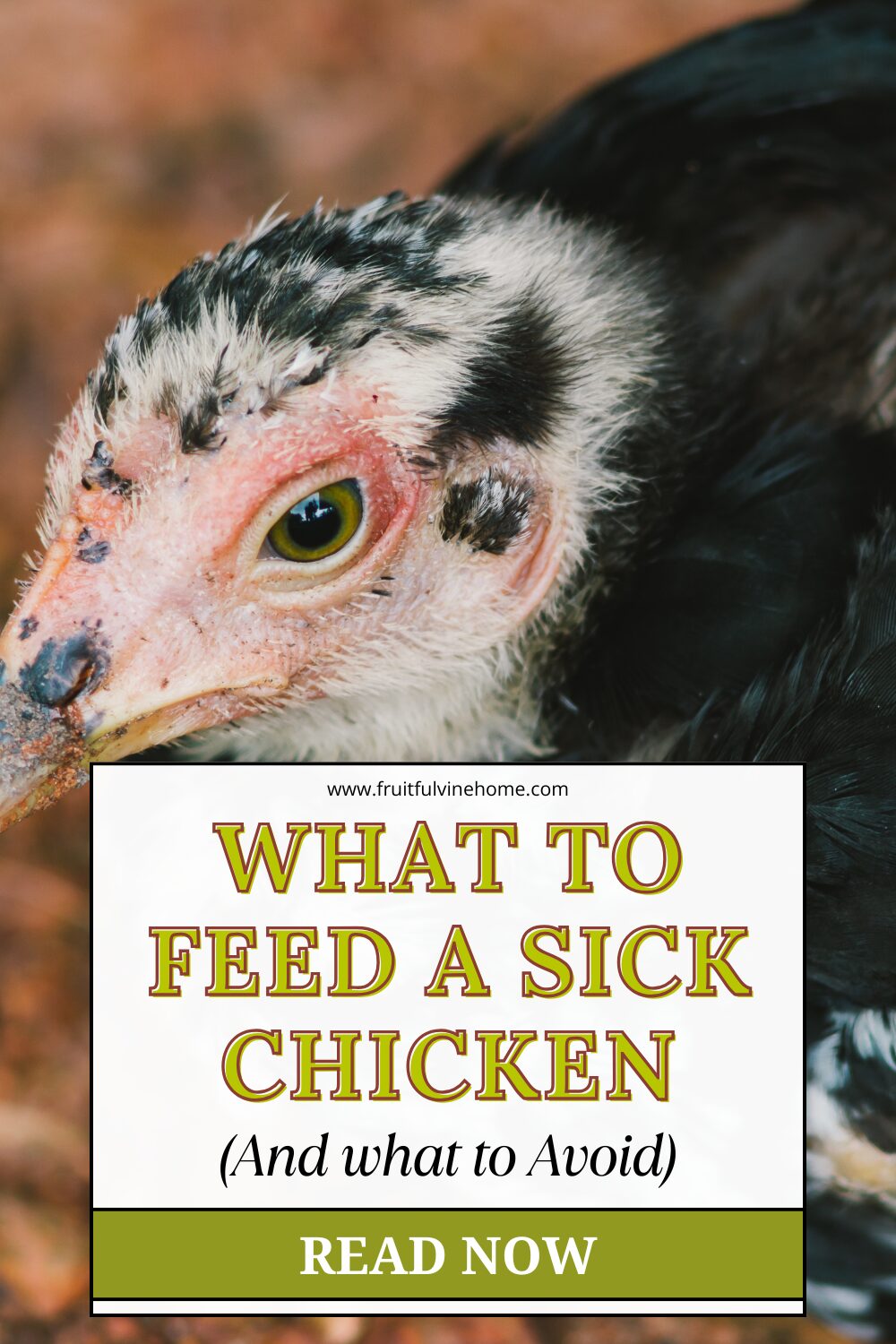
What to feed a sick chicken is often one of the first questions that comes to mind when a hen suddenly stops eating, stands off by herself, or seems too weak to visit the feeder. You want to help, but you may not know whether to offer her regular feed, a special treat, electrolytes, or something homemade.
The simplest place to begin is with hydration and her normal nutritionally complete chicken feed. A sick chicken does not need a complicated menu. She needs clean water, a quiet place to recover, easy-to-reach food, and careful observation while you work to identify the reason she is unwell.
A few years ago, one of my favorite hens, Sweetie, didn’t come running when I came out with her favorite treat: watermelon. She was ALWAYS first in line for treats, and I instantly knew something was wrong. Sure enough, I found her in the coop sitting on a clutch of eggs. She was broody. I had been very busy for the last few days and hadn’t checked on the chickens as much as I normally did, and my sons were the ones feeding them and gathering eggs every day. Well, they neglected to tell me that Sweetie was sitting on her eggs in the coop and wouldn’t let them get to them, so, as caring boys do, they just let her keep them!
This meant that Sweetie had not gotten up for DAYS to drink or eat. In the thick of our southern summer! When I discovered her in the coop, she was hot, dehydrated, and weak. Broody hens are quite passionate, and she even tried to peck me when I picked her up! I gathered her up gently and promptly brought her inside to cool her down, give her electrolytes, and watch over her. My stubborn girl would have happily died sitting on her clutch of eggs had I not noticed her absence at the call for treats.
Thankfully, she made a full recovery after intensive, round-the-clock care for about 4 days, and she still comes running for her watermelon every Saturday evening just before our family meal. But Sweetie wasn’t my first sick hen, and she won’t be my last. Knowing what to do right away often means the difference between life and death for a sick chicken. And that includes what to feed them and what not to feed them when their system is stressed.
This article will walk you through what you can offer, how to make her usual feed easier to eat, what foods should remain occasional extras, and when a lack of appetite needs more than supportive care at home.
This post contains affiliate links. As an Amazon Associate, I earn from qualifying purchases at no additional cost to you. Thank you for supporting Fruitful Vine Home.
Start With Water Before You Worry About Food
Before trying to tempt a sick chicken with several different foods, make sure she can easily reach fresh, clean water. Water is essential for digestion, and chickens often eat less when they are not drinking well. Place the water close enough that she does not have to walk far or compete with the flock.
If she is weak, watch quietly to confirm that she is actually swallowing. You can offer a poultry electrolyte product according to its label directions during illness, heat stress, or other periods of stress, but it should not become a substitute for identifying the underlying problem.
Never pour water into a chicken’s mouth or force liquid down her throat. Chickens can accidentally inhale fluid into their airway. If she cannot drink on her own, seems unable to swallow, or is becoming weaker, contact a poultry veterinarian or your local agricultural extension office for guidance.
The Best Food for a Sick Chicken Is Usually Her Regular Feed
A complete chicken feed is formulated to provide the balance of protein, energy, vitamins, and minerals your bird needs. When a hen is sick, keeping her primary food familiar and nutritionally balanced is usually better than replacing it with a bowl full of treats.
To make her regular feed easier and more appealing, place a small amount in a clean dish and add warm water until it becomes a soft mash. Let it absorb the water for a few minutes, then stir it into a consistency that is moist but not soupy. Offer a fresh portion and discard leftovers before they spoil.
Keep the dish close to where she is resting. A weak bird may be willing to eat when the food is within easy reach, even if she will not walk across a crate to find it. Continue offering dry feed as well unless a veterinarian has told you otherwise, so she can choose the texture she prefers.
Simple Foods That May Encourage a Sick Chicken to Eat
Sometimes a chicken needs a familiar smell or a small favorite food to encourage the first few bites. These extras should support her interest in eating, not replace her complete feed for several days.
- Moistened complete feed: This should remain your first choice because it provides balanced nutrition while being softer and easier to eat.
- A small amount of cooked egg: Plain scrambled or chopped hard-boiled egg may tempt a reluctant hen. Use it as a topper or short-term encouragement rather than her entire diet.
- A small spoonful of plain cooked oatmeal: This can occasionally make the feed more appealing, but mix it with complete chicken feed rather than serving a large bowl by itself. Some owners say to mix in a small amount of plain yogurt as well.
- A few favorite treats: A small amount of something familiar may help you determine whether she has any appetite at all. Keep treats limited so they do not crowd out balanced feed.
Offer one simple option at a time. Presenting a weak bird with a buffet of rich foods can make it harder to know what she ate and may upset her digestive system. The goal is not to create the perfect recovery recipe. The goal is to help her begin drinking and eating while you continue watching her symptoms.
Pay Attention to Why Your Chicken Is Not Eating
A chicken that refuses food may be dealing with more than a temporary loss of appetite. Crop trouble, parasites, infection, injury, heat stress, reproductive problems, toxins, and other conditions can all cause a hen to stop eating. Supportive food may help her maintain some strength, but it will not correct the cause by itself.
While she is in your care, check her overall condition before assuming she is simply being picky. Look at her breathing, droppings, posture, comb color, abdomen, feet, and crop. Note whether she is alert, whether she can stand, and whether she shows interest in treats but avoids swallowing.
If you are unsure what else to examine, review the signs your chicken is sick and write down anything that looks unusual. A simple symptom list can make it much easier to explain the situation if you need veterinary or extension support.
A Helpful Reference When You Are Trying to Decide What to Do First
When a chicken becomes ill, it is easy to bounce between several articles and forget what you have already checked. That is why I created the Chicken Care and First Aid Chart. It gives you an at-a-glance reference for common symptoms, possible concerns, and practical first steps so you can feel more organized while assessing your bird.

View the printable Chicken Care and First Aid Chart here.
What Not to Feed a Sick Chicken
When you are worried, it is tempting to offer anything that might make her eat. However, some foods can create more problems or make it harder for her to receive the nutrition she needs.
- Large amounts of treats: Scratch grains, bread, pasta, and other low-nutrient favorites can fill her crop without providing balanced recovery nutrition.
- Salty, sugary, or heavily seasoned foods: Table scraps prepared for people are not a good recovery diet for a sick bird.
- Moldy or spoiled feed: Discard any feed that smells musty, looks damp, or shows signs of mold. Mold toxins can seriously harm poultry.
- Unknown herbs, oils, or home remedies: Do not give concentrated products simply because they are described as natural. Natural does not automatically mean safe for chickens. Always check with a reputable source before administering any home remedies to a sick chicken.
- Anything forced into her mouth: Force-feeding or syringing food without proper instruction can lead to aspiration or injury.
Also avoid making sudden, dramatic changes to her diet unless a veterinarian recommends them for a specific condition. Familiar feed is easier to monitor and gives you a clearer picture of whether her appetite is returning.
How Often Should You Offer Food?
Keep a small amount of fresh feed available throughout the day, and check it often enough to see whether she is eating. If you are offering moistened feed or cooked egg, provide small fresh portions rather than leaving wet food sitting for hours. When Sweetie was sick, I checked her every hour until I saw signs that she was improving, and then I gave her space and only checked her every 3 hours or so.
Record what she eats and drinks, along with any changes in droppings, energy, or posture. Even a simple note on your phone can help you recognize whether she is improving or declining. Weighing her daily on a kitchen scale can also reveal weight loss that may not be obvious under her feathers.
Helpful but not necessary:
- Scale to weigh chicken
- Shallow non-tip bowl
- Collapsible Crate to Set Up for Care
- Crate Cover for Quiet Environment
When to Get More Help
A chicken that skips a little food during a stressful afternoon may begin eating again once she is calm and comfortable. A chicken that remains weak, refuses both food and water, cannot stand, has trouble breathing, shows neurological signs, passes blood, has a swollen abdomen, or declines quickly needs more help than a special meal can provide.
Separate her from the flock, keep her in a quiet and appropriate environment, practice good handwashing, and contact a poultry veterinarian, state poultry diagnostic laboratory, or local extension service. Sudden illness in more than one bird, unusual respiratory signs, or unexpected deaths should be reported promptly because some poultry diseases can spread quickly.
You can also review Chicken First Aid 101 for a broader overview of what to do when something seems wrong.
Frequently Asked Questions About What to Feed a Sick Chicken
Can I feed a sick chicken scrambled eggs?
Yes, a small amount of plain cooked egg may encourage a sick chicken to eat. It is best used as a temporary topper or appetite enticement alongside complete chicken feed, not as her only food for an extended period.
Should I give a sick chicken electrolytes?
A commercial poultry electrolyte product can support hydration during illness, heat, transportation, or other stress when used according to the label. Offer fresh water as well, and remember that electrolytes do not treat the underlying cause of illness.
How do I make soft food for a sick chicken?
Place a small amount of her regular complete feed in a clean dish and mix it with warm water. Allow the feed to soften, then stir it into a moist mash. Make small batches and remove leftovers before they spoil.
What if my sick chicken will drink but will not eat?
Continue making food easy to reach and try a small portion of moistened complete feed. If she continues refusing food, loses strength, or develops additional symptoms, seek guidance from a poultry veterinarian or extension professional rather than repeatedly changing her diet.
Keep the Next Step Simple
If you remember only one thing about what to feed a sick chicken, remember this: begin with clean water and her normal complete feed made easier to eat. Offer a small amount of a familiar food only if she needs encouragement, and keep watching for the reason behind her loss of appetite.
You do not have to solve everything in the first five minutes. Give her a quiet place, put water and food within reach, write down what you notice, and take the next sensible step. Calm observation is one of the most useful things you can offer a sick bird.
Keep This Information Handy
When you are caring for a sick chicken, remembering every symptom and first-aid step can feel overwhelming. The Chicken Care and First Aid Chart was designed to give you a simple printable reference you can keep nearby, so you do not have to rely on memory when you are already worried.
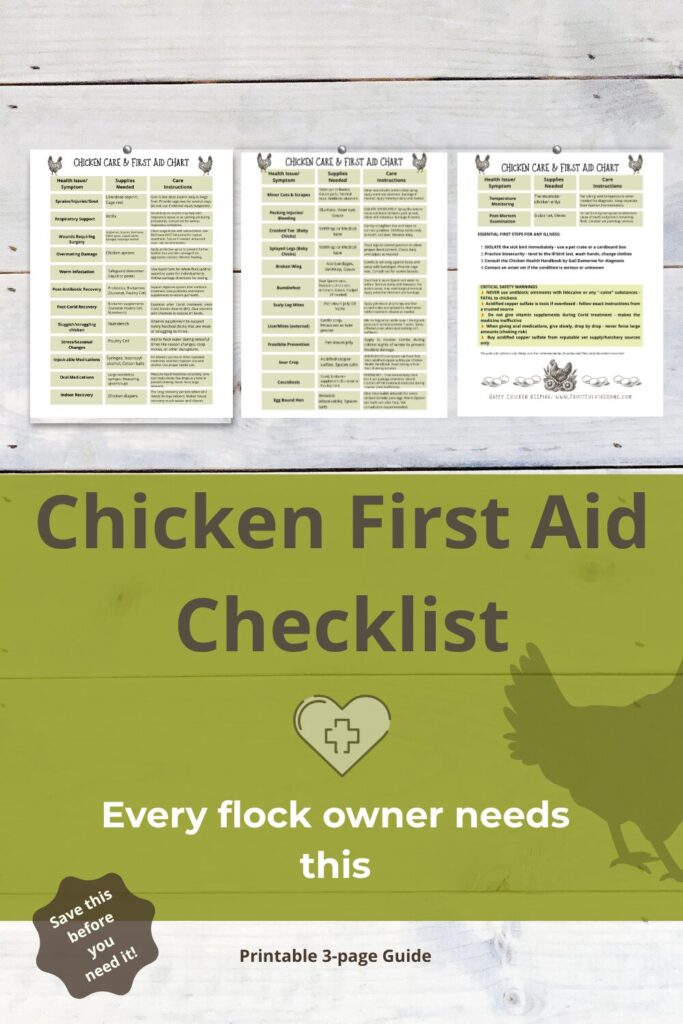
Get the Chicken Care and First Aid Chart here.