Today I am going to talk to you about how to start a home apothecary, but first, let me ask you something:
Have you ever looked into herbal remedies and immediately felt overwhelmed?
I still remember the first time I started researching herbs. What began as a simple search quickly turned into page after page of tinctures, teas, salves, extracts, and herbal names I couldn’t even pronounce. Every article seemed to recommend a different list of herbs, supplies, and books.
Instead of feeling prepared, I felt like I was already behind. Maybe you’ve felt that way, too?
The good news is that starting a home apothecary doesn’t have to be complicated. You don’t need dozens of herbs, a dedicated room, or years of experience. You simply need a place to begin.
In this article, I’ll walk you through:
• What a home apothecary actually is
• The basic supplies you need
• A few beginner-friendly herbs to start with
• How to keep things simple and organized
Most importantly, I’ll help you avoid the overwhelm that keeps so many people from getting started.
This post contains affiliate links. I receive commissions when you make purchases through these links at no additional cost to you!
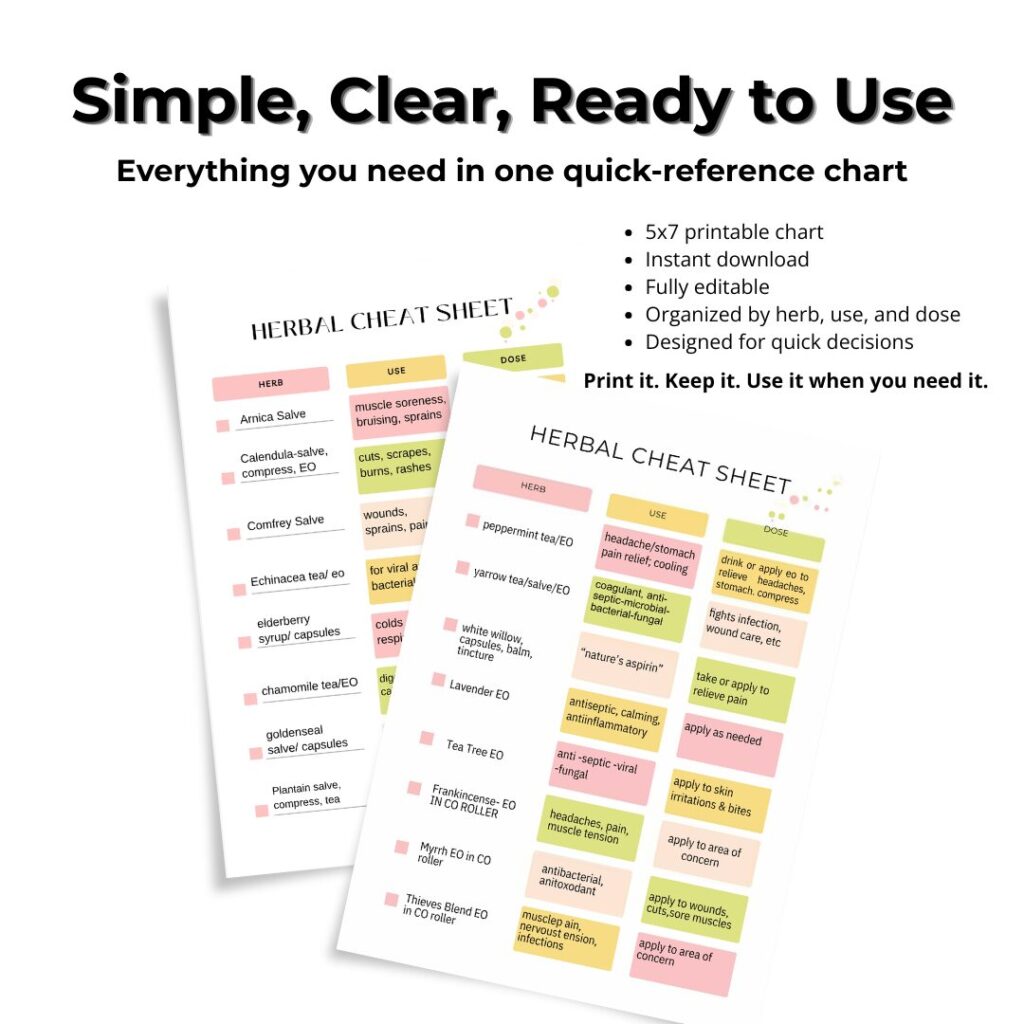
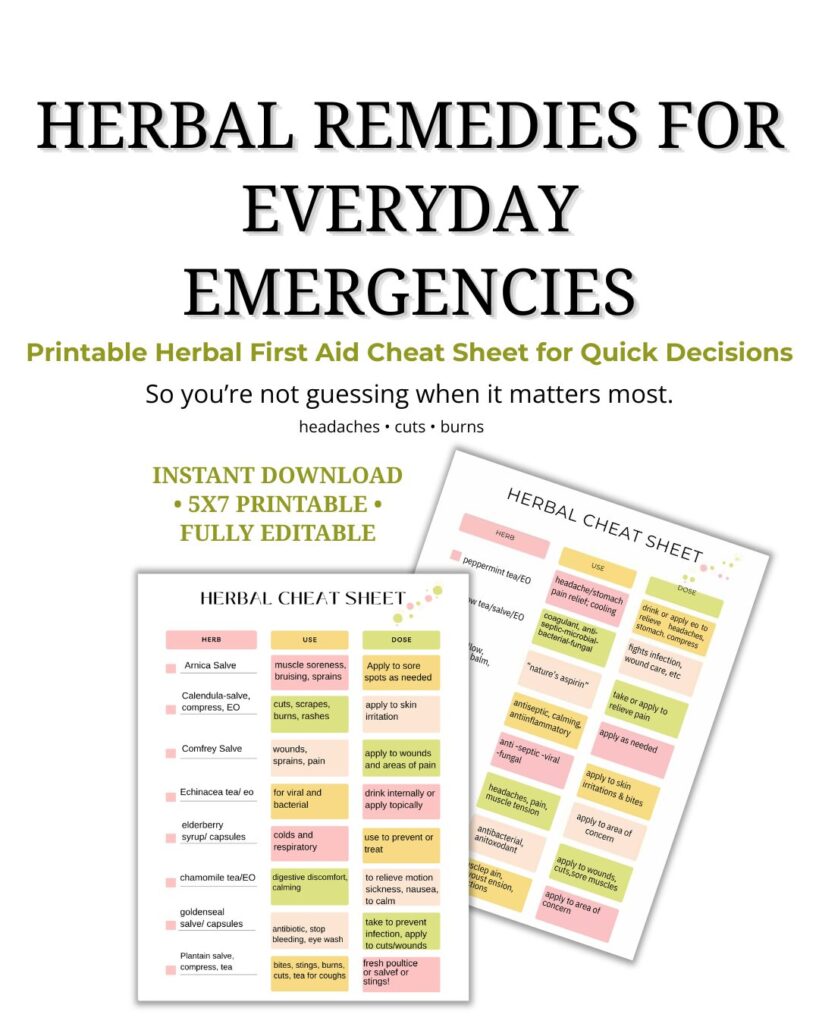
I created a printable Herbal Cheat Sheet you can keep in your kitchen or first aid binder. Get it Here >>>
What Is a Home Apothecary?
A home apothecary is simply a collection of herbs and natural remedies that you keep on hand for everyday use.
Think of it as a natural extension of your medicine cabinet.
Instead of scrambling to research every time someone in your family has a minor need, you have a small collection of trusted remedies ready when you need them.
That’s it.
A home apothecary doesn’t need to be fancy.
It doesn’t need to look like something from Pinterest.
And it certainly doesn’t need to contain every herb you’ve ever heard of.
A simple home apothecary is often the most useful one because you actually know how to use what’s inside.
How To Build A Home Apothecary Around Your Family’s Needs
One of the biggest mistakes beginners make is trying to prepare for every possible situation.
The truth is, your home apothecary should serve your family—not the internet.
Take a moment to think about the things your family deals with most often.
Maybe that’s:
• Occasional headaches
• Dry skin
• Stress and tension
• Seasonal sniffles
• Digestive discomfort
• Minor cuts and scrapes
Those everyday situations are the best place to start.
When you focus on real needs instead of hypothetical ones, building a home apothecary becomes much more manageable.
Helpful Resource
If you’re anything like me, remembering which herb is traditionally used for what purpose can feel overwhelming at first.
That’s exactly why I created my Editable Herbal Cheat Sheet.
It’s a simple printable reference guide that helps you quickly identify commonly used herbs and their traditional uses without having to search through multiple books or websites every time.
Get your Herbal Cheat Sheet Here
Best Herbs For A Beginner Home Apothecary
You don’t need twenty herbs. You don’t even need ten. Start with a few versatile herbs (especially ones that are safe for kids and pets) and learn them well. The best way I have learned through the years is not to try to master everything all at once. Start with ONE herb at a time and learn everything there is to know about that ONE. Full immersion is the best teacher! As I worked with each herb, I learned how to make salves, glycerites, tinctures, infused oils, capsules, and more.
I learned the healing properties of each herb and whether they were kid or pet-safe. I also studied whether or not each herb had any known contraindications or drug interactions. And this is the important part: it doesn’t have to be fancy, but keeping an apothecary journal while you are learning is so helpful! I always make notes when I notice something new or important I want to remember. A good rule of thumb is to study one herb and implement what you learn over the course of a month. After a year, you will have learned 12 herbs that you can confidently use. Once you master working with singular herbs, you can begin to learn about combining them or adding new ones to your home apothecary.
The following are the herbs I began with:
Chamomile
Chamomile is one of the most beginner-friendly herbs available. Traditionally, it’s used to support relaxation, calmness, and digestive comfort.
Peppermint
Peppermint is a popular herb for digestive support and soothing herbal teas. It’s easy to find, easy to use, and often one of the first herbs people add to their home apothecary.
Lavender
Lavender is well known for its calming aroma and relaxing properties. Many people use it in teas, sachets, bath products, and bedtime routines.
Calendula
Calendula is frequently used in salves and skin-support preparations. It’s one of the most popular herbs for herbal skincare.
Elderberry
Elderberry is a favorite among many families and is often included in seasonal wellness routines.
Remember: you don’t need all of these at once. Pick one or two and start there.
Home Apothecary Essentials: Supplies to Keep on Hand
Once you have a few herbs, you’ll need a simple way to store and organize them. Some beginner-friendly home apothecary essentials include:
• Glass storage jars. Amber glass jars work best for preparing and storing herbal remedies. These work great for salves.
• Labels ALWAYS label and date your preparations- trust me on this one!
• Small baskets to store small supplies in and keep them organized. Working with herbs, you’ll have lots of little things like funnels, labels, droppers, etc. Having a few small baskets on hand is helpful.
• Tea infusers– this is the quickest way to enjoy the benefits of an herb, tea!
• Measuring set I like to have a separate set of measuring spoons and cups for my herbal preparations.
• A reliable herbal reference book. This one is great for getting started!
Cheesecloth for straining herbal preparations is good to have on hand, too!
You don’t need expensive equipment. You simply need a system that makes it easy to find and use what you have. These don’t need to be purchased all at once. Add what you need as your apothecary grows. It also helps to keep all of your supplies in one designated spot in your home. This could be a cabinet, cupboard, or closet that is located out of direct sunlight and preferably in a dry, cooler section of your home.
How to Organize a Simple Home Apothecary
One of the easiest ways to reduce overwhelm is to keep your system simple.
A few ideas that work well:
• Use clear but amber containers whenever possible
• Label everything
• Store similar items together
• Keep frequently used remedies within easy reach
• Avoid buying more than you can realistically use
The goal isn’t perfection.
The goal is knowing where things are when you need them.
Frequently Asked Questions About Starting a Home Apothecary
What should be in a beginner’s home apothecary?
Start with a few herbs you want to understand, simple storage containers, and a reliable reference guide.
How many herbs do I need to start?
Just one or two is enough. Focus on learning a few herbs well before expanding.
Where should I store my herbal supplies?
A cool, dry cabinet, drawer, or shelf works well for most beginner home apothecaries.
Do I need to make my own tinctures and salves?
Not at all. Many people start with teas, dried herbs, and ready-made products.
Keep This Information Handy
If you’ve made it this far, you’ve probably realized something important:
Starting a home apothecary is much simpler than most people make it sound. You don’t need to know everything today. You just need a place to begin.
That’s exactly why I created the Editable Herbal Cheat Sheet.
Instead of trying to remember dozens of herbs and their traditional uses, you can keep a simple printable reference nearby whenever you need it.
Related Articles
• 10 Herbal Remedies Every Home Should Have (And When to Use Them)
Final Thoughts
If this feels like a lot, take a breath.
You don’t need to build the perfect home apothecary this weekend.
You don’t need every herb, every book, or every supply.
Start small.
Choose one or two herbs.
Learn them well.
Add to your collection gradually.
Preparedness isn’t built in a day.
It’s built one simple step at a time.
And if you’re starting to learn about herbs and natural remedies, you’re already further ahead than you think.