Today, I am sharing 10 herbal remedies every home should have, and when to use them, because I get questions from overwhelmed beginner herbalists all the time about which herbs to use and when. When you’re first starting with herbal medicine, it is a LOT of information to juggle (Just like raising baby chicks!), and there are moments most of us have had at least once:
- A headache comes on out of nowhere.
- A child runs in with a scrape.
- Someone isn’t feeling quite right.
And you know there has to be something simple you can use…
…but you’re not quite sure what.
So you reach for your phone.
You start searching. Scrolling. Guessing.
And in that moment, what you really want isn’t more information.
You want clarity, something you can trust. And you want to know what to use—fast.

How I got started with herbal remedies
Once, while at a homeschool camp with my kids, I was walking from the pavilion back to our cabin when I stepped on a bee. My foot began swelling very quickly, and I began to panic because I had nothing on me- no salve, no Benadryl, no tweezers to take the stinger out. Just then, a camp nurse was walking by, and she jumped into action. She bent down, right where we were standing in the hot sun, and plucked a few green leaves out of the grass, and told me to chew them up quickly.
Though shocked, I promptly did what I was told, and chewed the leaves until they were mush, at which point, she told me to spit them out into her hand, and then she placed the chewed-up herbs onto my foot, wrapped it up with guaze and tape and sent me on my way, saying, “There is no stinger left in your foot, but you got a pretty bad sting. Leave it on for about an hour and then remove it. If it is still swollen, replace it and leave it for another hour. Then remove.”
I was in awe of how calm and confident she was. Afterwards, I asked her what the leaves were, and she told me they were plantain, a common backyard weed that most people don’t realize is very useful, especially for bug bites and stings.
By the time I got back to my cabin, my foot no longer hurt. I sat there for an hour and then slowly unwrapped my bandage, and the swelling was almost completely gone, and there was NO redness, only a small dot where I had been stung! That was my first real experience with the healing power of herbs, and I began to study how to use them to heal. I wanted the knowledge that the nurse had, and I am so grateful that she shared hers with me in that moment!
RELIEF
Unless you are studying to be an herbalist, though, you don’t need a full apothecary to care for your home naturally. (Although having one is great!) You just need a handful of reliable remedies…and the confidence to use them.
These are the kinds of herbs that become second nature over time—the ones you reach for without hesitation. Let’s walk through a few of the most practical ones to start with.
10 HERBAL REMEDIES
(This post may contain affiliate links. As an Amazon Associate, I earn from qualifying purchases.) All of these remedies can be made, but I’ve also included some links to ready-made products for some to get you started!
🌼 1. Arnica
Use it for: muscle soreness, bruising, sprains
How to use: apply topically as a salve
👉 aff. link — arnica salve
🌼 2. Calendula
Use it for: cuts, scrapes, burns, skin irritation
How to use: salve, compress, or infused oil
👉 aff. link — calendula salve or oil
🌼 3. Comfrey
Use it for: wounds, sprains, pain
How to use: topical salve
👉 aff. link — comfrey salve
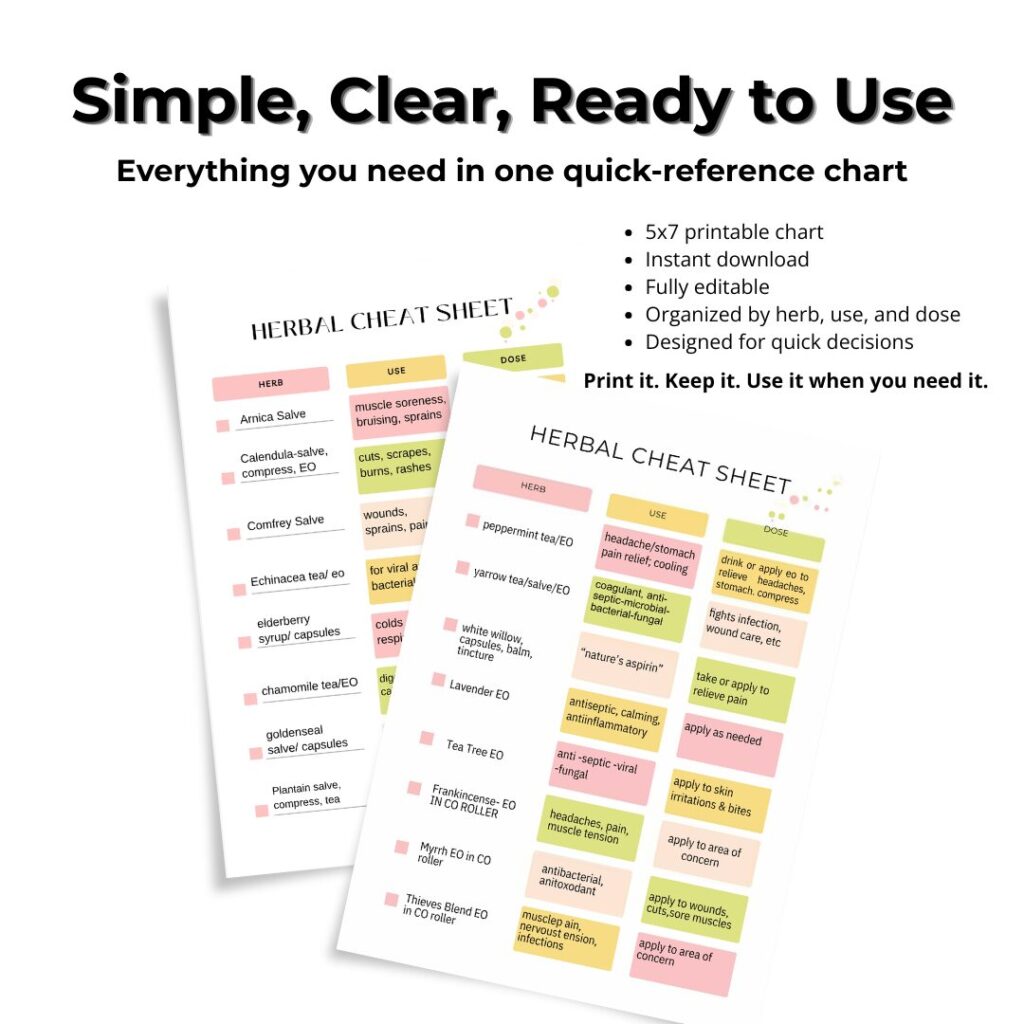
If you’re thinking”I’ll never remember all of these and are interested in a simple, clear, quick reference for common remedies, I’ve got you covered! I made this easy chart for my own herbal first aid kit so I wouldn’t have to think when I needed a remedy fast. You can check it out by clicking the image below:
🌼 4. Echinacea
Use it for: immune support
How to use: tea, tincture, or capsules
👉 aff. link — echinacea tincture or tea
🌼 5. Elderberry
Use it for: colds, respiratory support
How to use: syrup or capsules
👉 aff. link — elderberry syrup
🌼 6. Chamomile
Use it for: digestive discomfort, calming
How to use: tea or essential oil
🌼 7. Goldenseal
Use it for: infection support
How to use: capsules or topical
🌼 8. Plantain
Use it for: bites, stings, skin irritation
How to use: poultice, salve, or tea
🌼 9. Peppermint
Use it for: headaches, stomach discomfort
How to use: tea or diluted essential oil
🌼 10. Lavender
Use it for: calming, skin irritation
How to use: essential oil or infused oil
SIMPLE SUPPLIES TO GET STARTED MAKING HERBAL REMEDIES
If you’re building a small home apothecary, these are a few basics that make things easier:
- Glass jars for storage 👉 [aff. link]
- Carrier oils (like olive or coconut oil) 👉 [aff. link]
- Beeswax (for making salves) 👉 [aff. link]
- Dried herbs of choice
- Essential oils starter kit👉 [aff. link]
An Herbal Remedies Cheat Sheet
If you’re reading this and thinking:
“This is helpful… but I know I won’t remember all of this when I actually need it…”
You’re not alone.
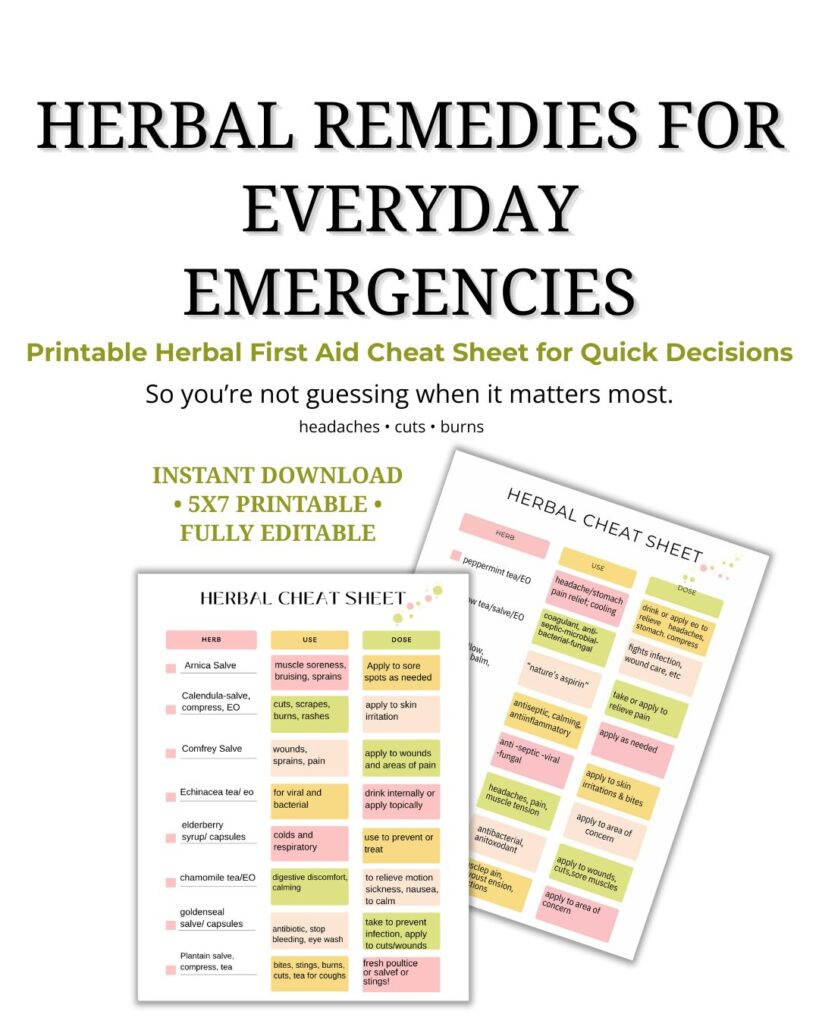
That’s exactly why I created a simple, printable herbal cheat sheet.
Instead of searching and second-guessing, you can keep everything in one place—organized by herb, use, and how to apply it—so you can make quick decisions when it matters most. And when you get more comfortable using herbs, it is completely editable to add your own remedies.
👉You can get it HERE:
Herbal Remedies Don’t Have To Be Complicated
Learning to care for your home naturally doesn’t happen all at once. You don’t have to know everything right now to start using herbs. Just pick ONE, and learn all about that, and soon you’ll be one step closer to being able to care for your loved ones with what nature provides.
It’s built slowly—one small herb at a time.
And over time, one herb becomes a whole herbal apothecary you’ve cultivated with care, that becomes something steady and dependable.
You just need a place to start. And I hope this post has been that starting place for you. And stay tuned—I will be sharing all my herbal knowledge on this blog soon!
