Today, I’m sharing the biggest canning mistakes beginners make and how to avoid them. If you’ve ever felt unsure or overwhelmed when it comes to canning, you’re not alone.
I still remember the first time I tried canning on my own. I had everything laid out on the counter, jars lined up, water boiling, jam made…and a quiet little voice in the back of my mind asking, “What if I’m doing this wrong?” I was so nervous. I must have checked and rechecked the recipe and canning instructions at least 10 times before I finally jumped in and did it.
There’s a lot of information out there—and when it comes to preserving food safely, it can feel like there’s no room for mistakes. And if, like me, you weren’t raised in a household that preserved food regularly, all the safety rules can be downright scary!
But the good news is this:
You don’t need to know everything to get started. You just need to understand a few key things—and have a simple system you can trust.
In this post, I’m going to walk you through the most common canning mistakes beginners make, so you can avoid them and feel confident in your kitchen. I also hope that this post will set you at peace because if I can do it, so can you!
THE PROBLEM: WHY CANNING MISTAKES ARE MADE & IT FEELS SO CONFUSING
Canning isn’t difficult—but it can feel overwhelming.
There are different methods.
Different processing times.
Different rules depending on what you’re preserving.
And when you’re just starting, it’s hard to know:
- What actually matters
- What’s safe
- What’s just extra noise
That’s where most canning mistakes happen—not from carelessness, but from confusion.
THE MOST COMMON BEGINNER CANNING MISTAKES
Let’s walk through the ones I see most often:
Canning Mistakes #1. Using the Wrong Canning Method
One of the biggest canning mistakes beginners make is not knowing when to use:
- Water bath canning
- Pressure canning
This matters because different foods require different methods to be safe.
High-acid foods (like fruits, jams, and pickles) can usually be water bathed.
Low-acid foods (like vegetables and meats) require pressure canning.
Using the wrong method can lead to unsafe food—even if everything else is done correctly.
Canning Mistakes #2. Guessing At Processing Times
This is a big one. It’s tempting to think: “That looks about right…”
But with canning, processing time is not something to guess or experiment with.
Every food has a specific time based on:
- What it is
- How it’s prepared
- The method used
Getting this wrong can mean your food isn’t preserved safely, and food that isn’t preserved by correct processing times is at risk of developing bacteria that can lead to serious, and sometimes life-threatening, food-borne illnesses. No one wants that!
Canning Mistakes #3. Overfilling or Underfilling Jars
Headspace matters more than most beginners realize.
Too much space → jars may not seal properly
Too little space → food can expand and cause issues during processing
Each recipe has a recommended headspace for a reason—and sticking to it makes everything go smoother.
Canning Mistakes #4. Not Adjusting for Altitude
This one surprises a lot of people.
If you live at a higher elevation, your processing times need to be adjusted.
Skipping this step can affect the safety of your food, even if everything else is done correctly.
Canning Mistakes #5. Trying to Remember Everything
This might be the most common mistake of all.
Trying to keep:
- methods
- times
- rules
all in your head while you’re working…
It’s overwhelming—and it’s where small mistakes sneak in. Always have your recipe and essential information right in front of you as you preserve food so that you can go step by step and not miss a thing!
A SIMPLE WAY TO AVOID Canning Mistakes
Get the Home Canning Quick Reference Guide Here!
If you’re like me, the hardest part isn’t doing the work—it’s trying to remember everything in the moment.
That’s exactly why I created a simple, printable Home Canning Quick Reference Guide.
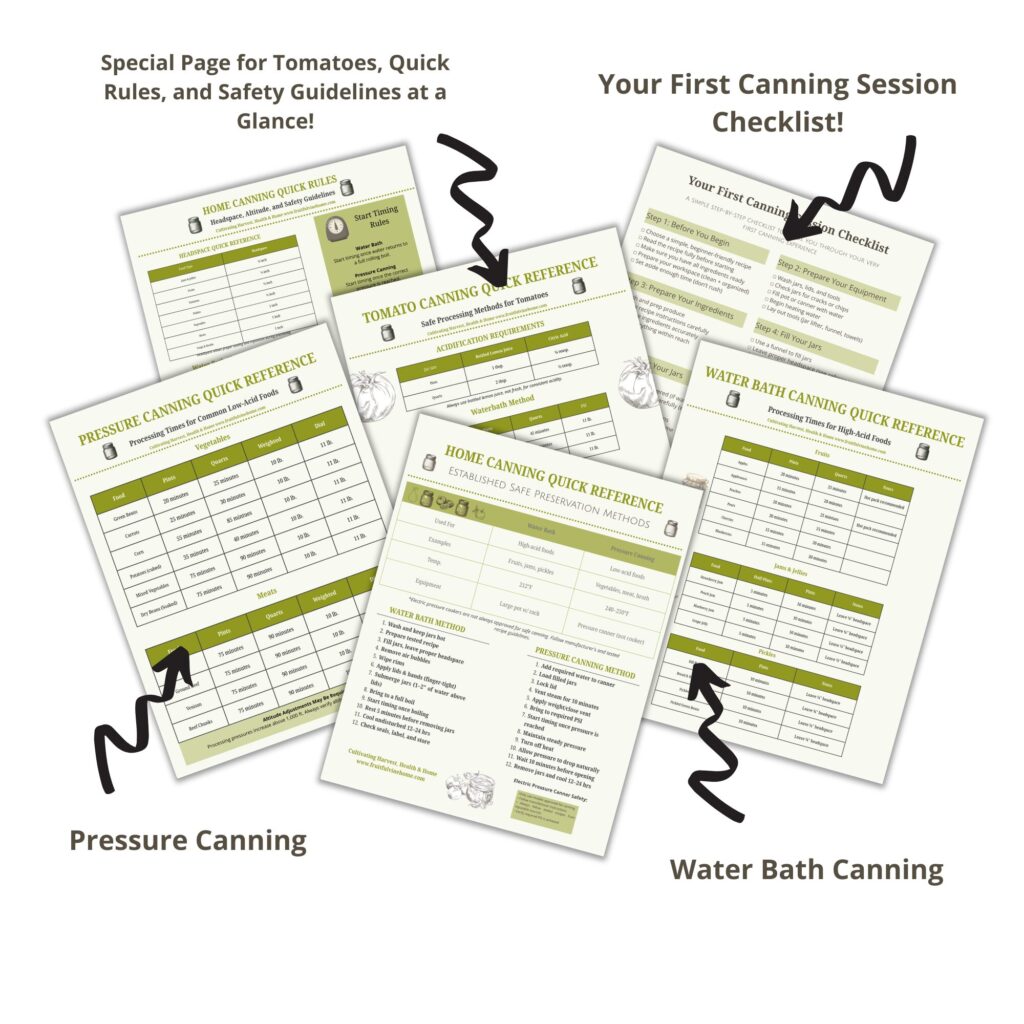
It gives you:
- Water Bath Canning Processing Times for High-Acid Foods
- Fruit Canning Times
- Jam & Jelly Processing Times
- Pickle Processing Times
- Tomato Canning Methods (water bath and pressure options)
- Acidification Requirements for Tomatoes
- Headspace Quick Reference Chart
- Altitude Adjustment Charts for Water Bath and Pressure Canning
- Start Timing Rules
- Cooling & Sealing Guidelines
- Food Safety Warning Signs
- + a checklist for your first home canning session!
So instead of second-guessing, you can just look down and know what to do.
WHAT THIS LOOKS LIKE IN REAL LIFE
Instead of:
- flipping between tabs
- re-reading instructions
- wondering if you’re doing it right
You have one simple reference sitting next to you.
You check it, follow it and move forward with confidence.
From overwhelm to peace. Complicated to easy.
QUICK RECAP
If you want to keep things simple, remember this:
- Use the correct canning method
- Always follow proper processing times
- Pay attention to headspace
- Adjust for altitude if needed
- Don’t rely on memory—use a reference
🌿 OPTIONAL TOOLS (IF YOU’RE JUST GETTING STARTED)
If you’re building your canning setup, these are a few tools that make the process much easier:
- A reliable water bath canner (This is the kit for beginners I use and recommend)
- A pressure canner (for low-acid foods) (This is the one I now own, it is an investment, but SO easy to use!)
- Wide-mouth mason jars w/lids (Check the prices at your local Tractor supply and Walmart, because you can often find them cheaper locally!)
Keeping things simple here goes a long way.
A LITTLE ENCOURAGEMENT
If this all feels like a lot, take a breath. You don’t have to master everything today.
Canning is a skill you build over time—and every batch you do, you learn a little more. Start with ONE recipe (strawberry jam was my first and very beginner-freindly!)
You’re not behind.
You’re learning.
And you’re doing something meaningful for your home and your family: learning to preserve wholesome, nutritious food and creating food security for your household. You’ve got this!
FINAL STEP
If you want to make canning feel simpler and more manageable, you can grab the Home Canning Quick Reference Guide here.
It’s designed to give you clarity right when you need it—so you don’t have to second guess yourself in the middle of the process.
KEEP LEARNING
Start here:
